
Getting your First 10 Customers is one of the most important stages when building a service business, consultancy, local business or early-stage B2B company.
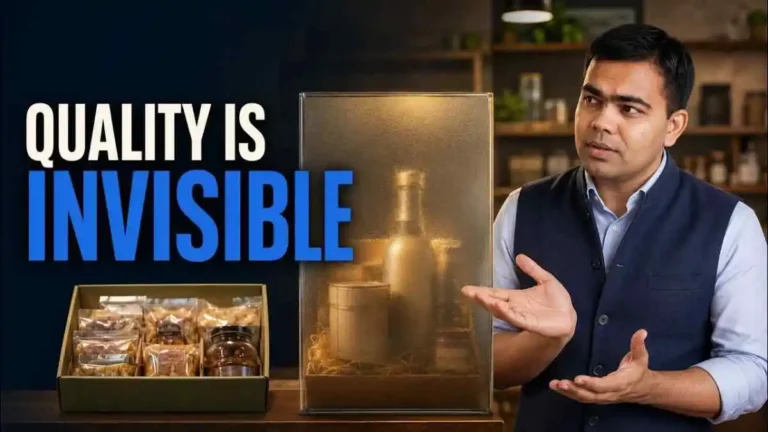
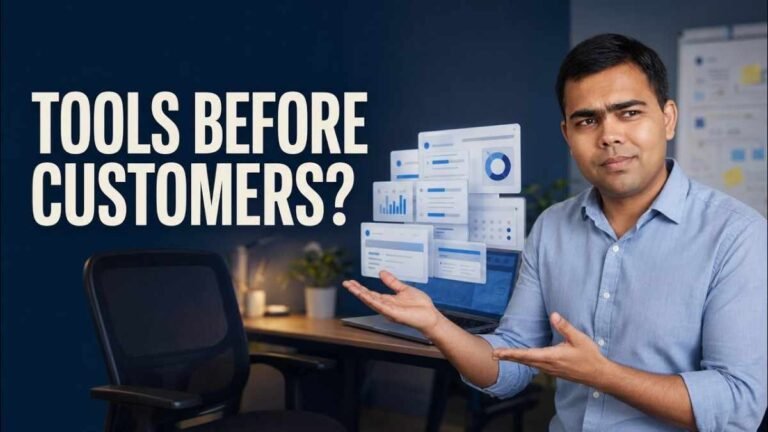
However, this is also where many founders make a common mistake. They assume that the fastest way to get customers is to increase visibility, create more content and start spending money on paid advertising.
So they build a website, polish their social media profiles, create content and quickly launch Google Ads or social media campaigns.
The problem is that advertising can bring traffic, but it does not automatically tell you who will buy, what they will buy or why they will buy it.
That is why your First 10 Customers should not be treated simply as a revenue target. They are an opportunity to build a learning system around your business.
Your early customers can help you understand your buyer, problem, offer, messaging, sales process, delivery and customer expectations.
Why Your First 10 Customers Are Different
Your first customers can give you information that website traffic, social media engagement and advertising impressions simply cannot provide.
They help you understand who genuinely needs your service, who is merely interested and who is actually willing to pay.
This distinction is extremely important.
Many businesses have followers but no customers. They have website visitors but very few enquiries. They have social media engagement but little revenue.
That does not necessarily mean there is no demand. It may mean that the right buyer, problem or offer has not been clearly defined.
Your First 10 Customers can help you identify that gap.
Every customer should teach you something. Customer number one should improve your approach to customer number two, and by customer number ten, your process should be significantly clearer.
Visibility Is Not the Same as Demand
Visibility means people can see your business. Demand means the right people care enough about your solution to take action.
For example, someone may like your Instagram post. That does not mean they are ready to buy your service.
Someone may visit your website, read your content and leave without making an enquiry.
That is why you should not only ask:
“How can I reach more people?”
A better question is:
“Which people are experiencing the problem I solve, and why would they pay me to solve it?”
That question can completely change your marketing strategy.
Start With One Buyer and One Problem
One of the easiest ways to make customer acquisition difficult is to keep your business too broad.
Statements such as:
“I provide marketing.”
“I offer consultancy.”
“I help businesses grow.”
may describe what you do, but they do not give the buyer a specific reason to purchase.
Customers usually do not buy “marketing” or “consultancy”. They buy solutions to specific problems.
Perhaps their leads are not converting. Perhaps follow-ups are being missed. Perhaps their website is not generating enough enquiries. Perhaps their sales team is struggling to follow up after sending quotations.
Start by choosing one clearly defined buyer.
Then identify one specific problem that matters to that buyer.
Finally, create one narrow paid offer around that problem.
Turn Your Skill Into a Narrow Paid Offer
Imagine a consultant says:
“I help businesses improve sales.”
That statement is very broad.
Now imagine the consultant offers:
“B2B Follow-Up Process Audit for Small Distributors.”
The consultant reviews the existing quotation process, identifies missed follow-ups and creates a practical action plan.
The buyer can immediately understand what the service involves.
The consultant also knows exactly what needs to be delivered.
At the early stage, you do not need to promise a complete business transformation.
Your objective is to create a useful, understandable and deliverable engagement that gives the customer a clear reason to buy.
Build an Offer People Can Understand
Your buyer does not necessarily need to know every skill you have.
They need to understand:
“What problem will you solve for me, and what will I receive?”
Think of your skills as ingredients and your offer as the menu.
A restaurant customer does not want to study the entire kitchen inventory before ordering. They want to see a menu and understand what they can buy.
Your customers need the same clarity.
A strong early-stage offer should clearly explain:
- who it is for;
- what problem it addresses;
- what the customer receives.
This reduces confusion and makes sales conversations much easier.
Free Discovery vs Paid Diagnostic
A free discovery call and a paid diagnostic are two different things.
A discovery call helps you understand the customer’s situation and determine whether there is a good fit.
A paid diagnostic involves actual professional work and produces a defined output.
For example, you might have a short discovery conversation first. If the problem is relevant, you can then offer a paid audit or diagnostic.
Free work can be useful in certain circumstances, but a free conversation does not prove that someone is willing to pay.
Your first customers should help you discover what buyers actually value enough to purchase.
Choose the Right Customer Acquisition Route
When looking for your First 10 Customers, you do not necessarily need the channel with the biggest audience.
You need a route that combines relevance, trust and learning.
That route could be your existing network, partner introductions, targeted outreach, relevant communities, local relationships or a pilot offer.
Five highly relevant conversations can be more valuable than thousands of irrelevant impressions.
Why? Because conversations allow you to understand what buyers actually need.
Warm Network, Partners and Communities
Your existing professional network can be a useful starting point.
Former colleagues, previous clients, suppliers, business contacts and acquaintances may help you reach relevant prospects.
However, your entire network is not automatically your target market.
Think of your network as a source of access, not guaranteed demand.
Partner introductions can also be powerful.
For example, an accountant, software provider, consultant or local business owner may already work with the type of customers you want to reach.
A relevant introduction can reduce the initial trust barrier.
Communities can work too, but simply posting promotional links is not community marketing.
Contribute useful information first. When a relevant problem appears, introduce your offer naturally.
Use Targeted Outreach Instead of Mass Spam
Targeted outreach does not mean sending the same message to hundreds of people.
It means identifying a smaller group of prospects who are reasonably likely to have the problem you solve.
Before contacting someone, ask yourself:
“Why do I believe this business may have this problem?”
Then build your message around their situation rather than writing a long description of your company.
For example:
“We provide premium digital marketing solutions.”
This is very generic.
Compare it with:
“I noticed your website has strong service pages, but the enquiry journey requires several steps. We help local service businesses identify and reduce this type of conversion friction.”
The second message gives the prospect something specific to consider.
The first goal of targeted outreach does not always have to be closing a sale.
Sometimes, the goal is simply to start a relevant conversation.
What a High-Trust Conversation Looks Like
A good sales conversation should feel more like diagnosis than performance.
Instead of spending the entire call explaining how great your business is, focus on understanding the customer’s situation.
Ask about the problem, how often it happens, how they currently deal with it and what they have already tried.
Listen carefully to the language the customer uses.
If a customer says:
“We struggle to follow up with leads after sending quotations.”
Pay attention to those exact words.
That language may later become useful in your website copy, sales messaging and offer.
Your first 10 conversations can become a valuable source of future marketing insight.
Create Your First-Week Customer Plan
Your first week should not disappear into endless preparation.
Many founders spend days perfecting their website, presentation, logo, social media calendar and marketing tools.
But until you speak to the market, you do not know whether your assumptions are correct.
During the first week, clarify four things:
- Buyer
- Problem
- Paid offer
- Acquisition route
Then identify qualified prospects and start conversations.
The First Five Qualified Conversations
Treat your first five conversations as learning opportunities rather than simply sales targets.
After every conversation, ask:
Did the buyer understand the problem?
Was the offer clear?
What objection did they raise?
Was price an issue?
Did they ask for proof?
Was the next step clear?
If three out of five prospects ask the same question, that is an important signal.
Perhaps your offer page needs more information.
If several prospects say the problem is not urgent, perhaps your buyer profile or positioning needs to change.
However, do not change your entire strategy after every rejection.
Change one major variable at a time so you can understand what actually improves the result.
Build a 30-Day First Customer System
A 30-day period should not be presented as a guaranteed “10 customers” challenge.
Every business has a different sales cycle. Industry, pricing, reputation, market size and customer urgency can all affect results.
Instead, use 30 days as an execution and learning window.
During the first week, define your buyer, problem and offer.
During the second week, focus on conversations and follow-ups.
During the third week, focus on delivery and proof.
During the fourth week, review the entire process.
Look at which route generated the most relevant conversations.
Also examine which offer created the strongest interest.
Use a First Customer Tracker
A simple First Customer Tracker can keep your early customer acquisition process organised.
You can record:
| Information | What to Record |
|---|---|
| Buyer | Customer or prospect |
| Route | Where the customer came from |
| Problem | Problem discussed |
| Follow-up | Next action |
| Objection | Customer concern |
| Outcome | Result of conversation |
| Learning | What you discovered |
| Delivery | Current delivery stage |
| Proof | Result or evidence |
| Introduction | Potential referral |
The purpose of the tracker is not to create a perfect sales forecast.
It is to help you identify patterns.
You may discover that referrals generate fewer leads but better customers.
You may also discover that direct outreach creates many responses but fewer conversions.
That information can make future marketing decisions much more effective.
Learn From Every No
Every “no” means something different.
No response could indicate poor timing, weak targeting or low trust.
“Not a priority” may mean that the problem is not urgent enough.
“Too expensive” may genuinely be about price. However, it could also mean the buyer does not understand the value.
“We already have someone” may indicate strong competition or weak differentiation.
Therefore, do not treat every rejection as the same type of feedback.
Record the actual words used by the prospect.
Do not rewrite the objection into something that feels more comfortable.
Turn Objections Into Better Marketing
Repeated objections can help improve your marketing.
If prospects repeatedly ask what is included, make your offer page clearer.
If they repeatedly ask whether you have worked with similar businesses, add relevant experience or case studies.
If they do not understand the expected outcome, make your messaging more outcome-focused.
Your market is constantly giving you feedback.
You simply need to capture it properly.
At the same time, your follow-up should never rely on pressure, guilt or fake urgency.
If someone is not ready, a respectful follow-up and a clear next step are enough.
Turn Your First Customers Into Proof
Getting paid is not the end of the customer journey.
If you deliver useful work, that engagement can become proof that helps you attract the next customer.
After each successful engagement, record:
Original problem → Work delivered → Customer experience → Change → Remaining challenge
This can become a simple case note.
For example:
“The business had an inconsistent quotation follow-up process. We reviewed the existing workflow, identified three recurring gaps and created a structured follow-up process for the sales team.”
This tells future customers what type of problem you solve.
If the customer is comfortable, you can also request a testimonial.
Case Notes, Testimonials and Referrals
Specific proof is generally more useful than generic praise.
“Great service” is positive, but it does not tell a future customer much.
A more useful testimonial explains the problem, experience and outcome.
You can also create a case study while protecting confidential information.
Referrals can be another valuable outcome.
However, a referral is not something a customer automatically owes you.
If the customer is genuinely satisfied and comfortable, you can ask whether they know another business facing a similar problem.
Your First 10 Customers can therefore create more than revenue.
They can generate proof, feedback, referrals and a better understanding of your market.
When Should You Start Paid Ads?
Paid advertising is not inherently wrong.
The real question is how and why you are using it.
Some businesses can generate customers through paid advertising from the very beginning.
Others benefit more from direct conversations and early validation.
There is therefore no universal rule that says every business must wait until exactly 10 customers before advertising.
A better principle is:
Do not scale acquisition spending before understanding what you are scaling.
If you do not understand your buyer, offer or conversion process, advertising data can become difficult to interpret.
You might generate clicks without qualified leads.
You might generate leads without customers.
You might generate customers without profitable economics.
The Signals That Show You Are Ready
Before scaling paid advertising, you should be able to answer some basic questions.
Who is your best buyer?
What problem are they willing to pay to solve?
Can they understand your offer without a long explanation?
Have real customers demonstrated willingness to pay?
Is your delivery process reliable?
Do you have truthful proof?
And most importantly:
Can your economics support customer acquisition?
The clearer these answers are, the easier it becomes to interpret paid advertising results.
A Practical Roadmap From Customer 0 to 10
At customer zero, your primary objective is clarity.
Define the buyer, identify the problem, create a narrow paid offer and start conversations.
With customers 1–3, look for patterns.
Understand why people buy, why they hesitate and which objections appear repeatedly.
With customers 4–6, focus heavily on delivery.
Ask whether customers are receiving the value you promised.
Can the delivery process be repeated?
Can you create useful proof?
With customers 7–10, start comparing acquisition routes.
Identify which routes consistently generate qualified customers.
Do not measure success only by lead volume.
Five high-quality conversations can be more valuable than dozens of low-quality leads.
What to Improve at Each Stage
| Stage | Main Objective | What to Learn |
|---|---|---|
| Customer 0 | Start conversations | Who experiences the problem? |
| Customers 1–3 | Improve the offer | Why do people buy or hesitate? |
| Customers 4–6 | Strengthen delivery | What creates genuine value? |
| Customers 7–10 | Compare acquisition routes | Which route creates qualified customers? |
| After 10 | Evaluate scaling | Can acquisition and fulfilment support growth? |
The most important point is that the customer count itself is not the strategy.
What matters is whether your system becomes better with every customer.
If customer number ten is being acquired and served in exactly the same way as customer number one, you may have created activity without creating enough learning.
Conclusion
Getting your First 10 Customers does not always require a large advertising budget, a huge audience or a complicated marketing funnel.
For service businesses, consultants, local businesses and early-stage B2B companies, a more focused approach can often be a better starting point.
Choose one buyer.
Choose one meaningful problem.
Create one narrow paid offer.
Then start conversations through a route where relevance and trust are strong.
Listen carefully to every conversation.
Record objections.
Learn from customer feedback.
Turn successful delivery into proof.
Then improve the process after every customer.
Paid advertising can eventually accelerate this system.
But advertising should not become a substitute for understanding your buyer, offer and fulfilment process.
Your First 10 Customers are not a guaranteed 30-day revenue challenge.
They are a practical learning phase that helps you understand what should be repeated, improved or stopped.
So start today.
One buyer. One problem. One narrow paid offer.
Then identify your first five qualified prospects and start the conversations.
The biggest outcome of reaching customer number ten should not simply be ten invoices.
It should be a business that understands its customers far better than it did when customer number one arrived.
FIVE KEY TAKEAWAYS
- Choose one buyer, one meaningful problem and one narrow paid offer before increasing activity.
- Select the starting route through Relevance, Trust and Learning—not audience size alone.
- Treat the first seven days and next 30 days as an execution-and-review system, not a guaranteed result window.
- Record objections and change one major variable at a time.
- Convert delivery into truthful proof and scale only when repeatability, fulfilment and economics are sufficiently understood.
Test Your Understanding
Think you understand the Get Your First 10 Customers Before Paid Ads
Take the Quize Get Your First 10 Customers Before Paid Ads